


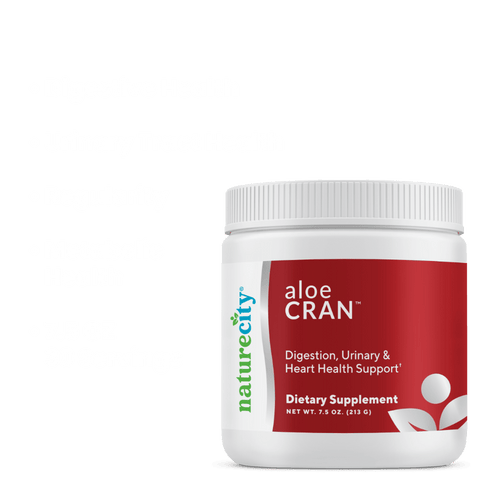






AloeCran
Digestion, Urinary & Heart Support
Makes a delicious sugar-free drink with, organic Aloe vera, whole cranberry fruit extract and 5 grams of soluble dietary fiber per serving.
Helps balance stomach acid levels and promotes healthy digestion
Helps relieve occasional bloating and gastrointestinal discomfort
Helps promote urinary tract health and intestinal health
365 DAY
GUARANTEE-
FREE SHIPPING
OVER $69 SECURE
PAYMENTS-
A+ CUSTOMER
SUPPORT
ESTIMATED ARRIVAL Jun 14 - Jun 16
The AloeCran Difference
The USDA certified organic ACTIValoe is also certified for authenticity and purity by the International Aloe Science Council, which matters because adulterated (fake) Aloe in the market is a growing concern.
Plus, published research with ACTIVAloe indicates it can offer benefits for digestion and skin, as well as helping you maintain already-healthy cholesterol and blood sugar levels.
The PACran whole cranberry powder extract was the subject of high-quality research study cited by the FDA in their issuance of a qualified health claim for cranberry and urinary tract infections (UTI) which says:
“Limited scientific evidence shows that by consuming 500 mg each day of cranberry dietary supplement, healthy women who have had a urinary tract infection (UTI) may reduce their risk of recurrent UTI”.
Fiberest® is a Non-GMO soluble fiber that ferments much more slowly in the large intestine than some other fibers - so it’s unlikely to cause unwanted effects like gas and bloating.
Research with Fiberest® and similar fiber ingredients show it can help you stay regular and increase the volume of waste being excreted. In addition, 5 grams of fiber can help support heart and metabolic health too.
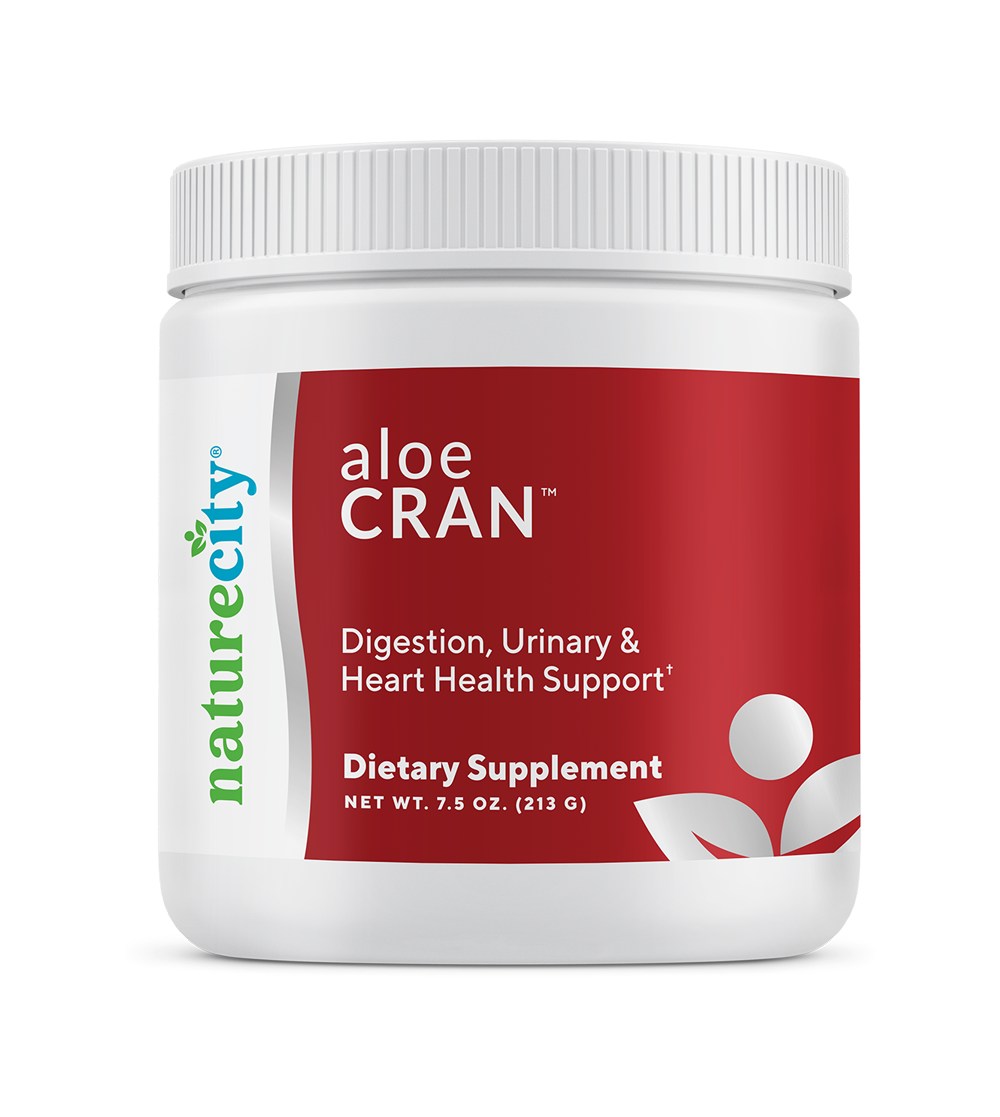


Made with Clean, Scientifically
Validated Ingredients

The use of Aloe for health dates back over 4,000 years. Part of what makes Aloe unique and helped it thrive on Earth for thousands of years is its biological complexity. It naturally grows with an estimated 200 nutritional compounds including many vitamins, minerals, enzymes, amino acids, plant sterols and the powerful Aloe polysaccharides.
As many of these nutrients are only present in trace amounts, the brilliance of Aloe vera is how these nutrients work together to help support your digestion, skin, joint health, heart and blood sugar health, and more.
Some Aloe vera researchers have explained this by comparing Aloe to a symphony orchestra versus a solo performer. The many instruments playing together sound much more powerful and beautiful than apart.
This is why it’s important to choose a premium quality Aloe vera ingredient for your supplement. You want Aloe that’s been handled properly after harvesting to ensure that the many nutrients haven’t been degraded or destroyed. The organic ACTIValoe® Aloe vera in AloeCran is carefully grown and handled to maximize nutritional potency.
ACTIValoe® is made using a patented dehydration technology – called Qmatrix™ – that helps protect the Aloe vera nutrients. Qmatrix™ removes water from a fresh Aloe leaf using a low temperature/short time (LTST) method that protects heat sensitive Aloe nutrients.
Each serving of ACTIValoe® is guaranteed to provide a minimum of 10% polysaccharides – which are among the most important nutrients in Aloe vera. What’s more, ACTIValoe® is certified for content and purity by the International Aloe Science Council (IASC).
Research with ACTIValoe® and Aloe vera indicates it may help you in the following ways:
- Helps balance stomach acid and supports healthy digestion
- Helps support already-healthy cholesterol levels
- Helps support already-healthy blood sugar levels
- Helps reduce oxidative stress and support immune system function
- Helps promote healthy looking skin
Cranberries are native to North America and grow in several cold-weather northern states (and parts of Canada). Cranberries are rich in phytonutrients that help the plant survive the cold weather season.
In addition to vitamins and many types of polyphenols, cranberries contain powerful proanthocyanidins (PACs) that are believed to contribute to cranberry’s urinary tract health benefits and antioxidant support.
AloeCran is formulated with a whole cranberry powder called PACran®. It’s made from the entire cranberry – the skins, flesh, juice and seeds – just as nature made it. Research with whole cranberry extracts suggests that the whole berries may be more beneficial than single components.
PACran® naturally packs a lot of potency as it’s made with berries harvested from cranberry bogs in Massachusetts, some of which are over 100 years old.
PACran® whole cranberry powder extract was the subject of a high-quality research study cited by the FDA in their issuance of a qualified health claim for cranberry and urinary tract infections (UTI) which says:
“Limited scientific evidence shows that by consuming 500 mg each day of cranberry dietary supplement, healthy women who have had a urinary tract infection (UTI) may reduce their risk of recurrent UTI”.
Better yet, the urinary tract health benefits of PACran® come without the sugar found in cranberry juice. Cranberries are actually naturally low in sugar – but the juice is very bitter. To compensate, many makers of cranberry juice add a lot of sugar to make it taste better.
In each 500mg serving of PACran®, you’re only consuming about 64mg of sugar, which is 468x less than the 30g of sugar found in some cranberry juice products.
Almost everyone struggles to consume enough dietary fiber daily. In fact, it’s estimated that less than 10% of adults reach the target levels for fiber daily. These targets are 25g to 30g for women and 30g to 35g for men (men tend to weigh more and have a greater calorie requirement).
To help bridge some of the shortfall, taking a fiber supplement makes sense. The challenge is that many fiber supplements can cause unwanted effects, namely gas, bloating, cramping, or other gastrointestinal discomfort.
Why do many fiber supplements cause these unwanted effects?
Two main reasons, both of which relate to gas. First, fiber ferments in the intestines. This is good because it contributes to the prebiotic properties of fiber, and otherwise can help support a healthy gut. However, when fiber ferments too fast, it creates a lot of excess gas and can make you feel bloated.
On top of this, some fibers have a bulking or gelling effect, where water becomes a gel, which creates bulk. This can be a good thing because it may help eliminate waste through the system, but it can also trap gas. This results in the gas being expelled slower, which again can lead to gastrointestinal discomfort.
Non-GMO Fiberest® is a soluble dietary fiber made from Non-GMO corn and gives you the best of both worlds. It helps support intestinal regularity, healthy bowel movements and gives you many other benefits associated with fiber yet is unlikely to cause the discomfort caused by excess gas and bloating.
Once Fiberest® gets to the large intestine, it ferments very slowly. This results in the production of short chain fatty acids, which promote gut friendly bacteria in the gut (prebiotic activity). A natural byproduct of this fermentation is gas, but because Fiberest® ferments so slowly, it’s doesn’t cause flatulence or bloating. This is why it’s tolerated much better than some other fibers.
Here’s a summary of how the 5g of Non-GMO FIberest® in each serving of AloeCran may help you:
- Helps you stay regular with more complete bowel movements
- Helps promote a healthy gut microbiome and balance of good gut bacteria by acting as a prebiotic
- Helps reduce the post meal spike in blood sugar, which helps support healthy blood sugar metabolism
- Helps you maintain already- healthy triglyceride levels
- Helps support healthy digestion

FAQ from
NatureCity Customers
Most AloeCran users find it to be delicious as well as nutritious. AloeCran has natural raspberry and other berry flavors with sweetness from monk fruit and stevia. We generally recommend adding a scoop to 8 oz of cold water, but you can adjust the amount to your liking. AloeCran can also be added to shakes, smoothies or mixed with other drinks.
Each serving of AloeCran contains 15 calories, which is from the dietary fiber. AloeCran is sugar and fat free and does not contain any artificial sweeteners or flavors.
The answer is yes to all.
AloeCran makes a delicious, refreshing drink you can have any time of the day. Instead of a sugary drink, make yourself a healthy glass of AloeCran.
AloeCran can be enjoyed with or without meals. A benefit of drinking with meals is the Aloe vera may help vitamin and nutrient absorption, and the 5 grams of fiber per serving may help blunt the post-meal blood sugar spike.
You can use both AloeCran and TrueAloe, we have many clients who use both products. It’s not too much Aloe, unless you’ve received specific instructions from your healthcare practitioner.
Proanthocyanidins (PACs) are phytonutrients believed to be an important part of cranberry’s health properties. Cranberries contain unique A-type PACs, seldom found elsewhere in nature, that help promote urinary tract health.
However, research with PACran indicates that the other nutrients in cranberries are important too, which is why PACran is made from the entire cranberry – including the juice, flesh, skin and seeds.
Each serving of AloeCran includes the same 500mg of PACran shown to promote urinary tract health, which includes about 3mg of cranberry PACs.
AloeCran Supplement Facts
Serving Size: 1 Scoop (7.1 g) / Servings per container: 30
| Amount Per Serving | % Daily Value | |
|---|---|---|
| Calories | 15 | |
| Total Carbohydrate | 6 g | 2%* |
| Dietary Fiber | 5 g | 18%* |
| ACTIValoe® (aloe vera inner leaf gel) (from 200x concentrate) | 200 mg | ‡ |
| Pacran® (cranberry fruit powder) | 500 mg | ‡ |
| Fiberest® (soluble corn fiber) | 5.4 g | ‡ |
| Malic acid | 280 mg | ‡ |
| Stevia Leaf extract | 70 mg | ‡ |
| Luo han guo fruit extract | 12 mg | ‡ |
| *Percent Daily Values are based on a 2,000 calorie diet. ‡ Daily value not established. | ||
| Other ingredients: natural flavors, beet root (color), rice hull concentrate, potassium citrate, gum acacia. | ||
How and When To Use

Add 1 scoop to 8oz of cold water (this can be adjusted to taste) and mix well. AloeCran can also be added to smoothies, shakes, juices or any other way you enjoy.

Multiple servings can be enjoyed throughout the day, or as directed by your healthcare practitioner.

AloeCran can be enjoyed with or without meals. A benefit of drinking AloeCran with meals is the Aloe vera may help vitamin and nutrient absorption, and the 5 grams of fiber per serving may help blunt the post-meal blood sugar spike.
Curiosity Corner
More information for those who like the finer details


